

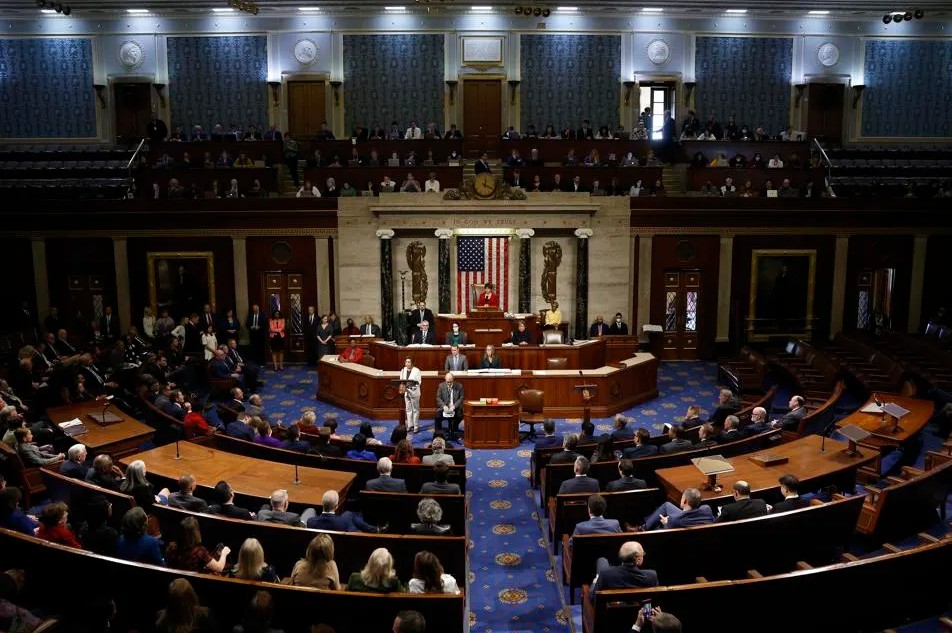
Congress Begins Defining the Crypto Landscape
Two major bills are advancing in Washington, aiming to finally establish regulatory clarity around digital assets:
- The GENIUS Act: focused on stablecoins
- The Clarity Market Structure Bill: focused on exchanges and how digital assets are classified
For years, crypto has existed outside the traditional financial system. That’s about to change.
The GENIUS Act: Bringing Stablecoins Under Control
Today, stablecoin issuers operate in a loosely defined environment. If they can find a cooperative bank, they can issue, often without mandatory audits or clear redemption rules. The GENIUS Act would change that.
It requires:
- 1:1 backing with cash or short-term U.S. Treasuries
- Monthly reports proving reserves
- Issuers must be banks or qualified non-bank institutions
- Issuers under $10B can opt for state-level oversight
- Full AML compliance and limits on foreign-controlled entities
- Members of Congress are barred from personally profiting from stablecoin holdings
Why it matters:
- Currently, it’s not always clear what backs a stablecoin or whether redemption is guaranteed.
- This bill enforces transparency, accountability, and jurisdictional compliance.
- It narrows who can launch stablecoins, limiting loosely run or offshore-backed projects.
For users:
- Redemption terms will become predictable and enforceable.
- Launching new stablecoins will require real capital and regulatory infrastructure.
- Fewer options, but reduced risk of failure or fraud.
Clarity Market Structure Bill: Exchanges Face New Rules
Crypto exchanges have long operated in legal limbo. Is a token a commodity? A security? No one’s known for sure, and enforcement has often come too late.
This bill creates a path forward:
- Dual SEC/CFTC registration for exchanges
- Surveillance systems to monitor manipulation and insider trading
- A legal process to classify tokens by asset type
What changes:
- Right now, exchanges can list nearly anything with minimal disclosure.
- No consistent rules for monitoring trading activity.
- Tokens can shift billions in value without clear legal footing.
Going forward:
- Exchanges will need compliance systems like those in traditional finance.
- Some tokens will be formally classified as securities, restricting where they can trade.
- Token launches will face heavier scrutiny from the start.
For users:
- Fewer surprise delistings and post-facto crackdowns
- Some tokens could become inaccessible if reclassified
- Rising compliance costs may push out smaller platforms
Why Now? Stablecoins now handle billions in daily volume. Exchanges are functioning as full-blown financial infrastructure. Regulators are playing catch-up, and the window for unregulated innovation is closing.
This isn’t about banning crypto, it’s about putting it into a framework the rest of finance already operates under.
What To Expect
If these bills pass, we’ll see a dramatically different crypto environment in the U.S.:
- Stablecoins will resemble money market funds with strict liquidity backing
- Exchanges will operate with defined oversight
- New projects will face higher legal and capital hurdles
- The era of fast, anonymous token launches is nearing its end
For individuals:
- Safer custody and redemption
- More predictable access to liquidity
- Fewer overnight failures
- But also: fewer experimental coins and longer timelines for innovation
Why This Matters to Real Estate
As a real estate broker, I’m already seeing early signs of crypto intersecting with real property markets from crypto-backed mortgage products to investors leveraging digital assets for down payments or transfers.
If these regulations bring more stability and legal clarity to stablecoins and exchanges, that could open the door for broader adoption in real estate:
- Title companies and lenders may become more comfortable accepting crypto in deals
- International buyers might use stablecoins with more confidence
- Tokenized real estate platforms could scale faster under a clear regulatory framework
- Agents and brokerages may see fewer compliance risks when clients bring crypto into a transaction
In short, these bills may reduce the friction between traditional real estate and the crypto economy. That’s good news, as long as you’re paying attention.
Final Thought
Regulation is coming. It will remove some of the chaos that’s defined crypto for the last decade, but it will also rein in the freedom that allowed so many new ideas to emerge so quickly.
For investors, builders, and industries like real estate that sit at the edge of this evolving market, now’s the time to take note, and be ready to adapt.




Leave a Reply
Your email is safe with us.
You must be logged in to post a comment.